
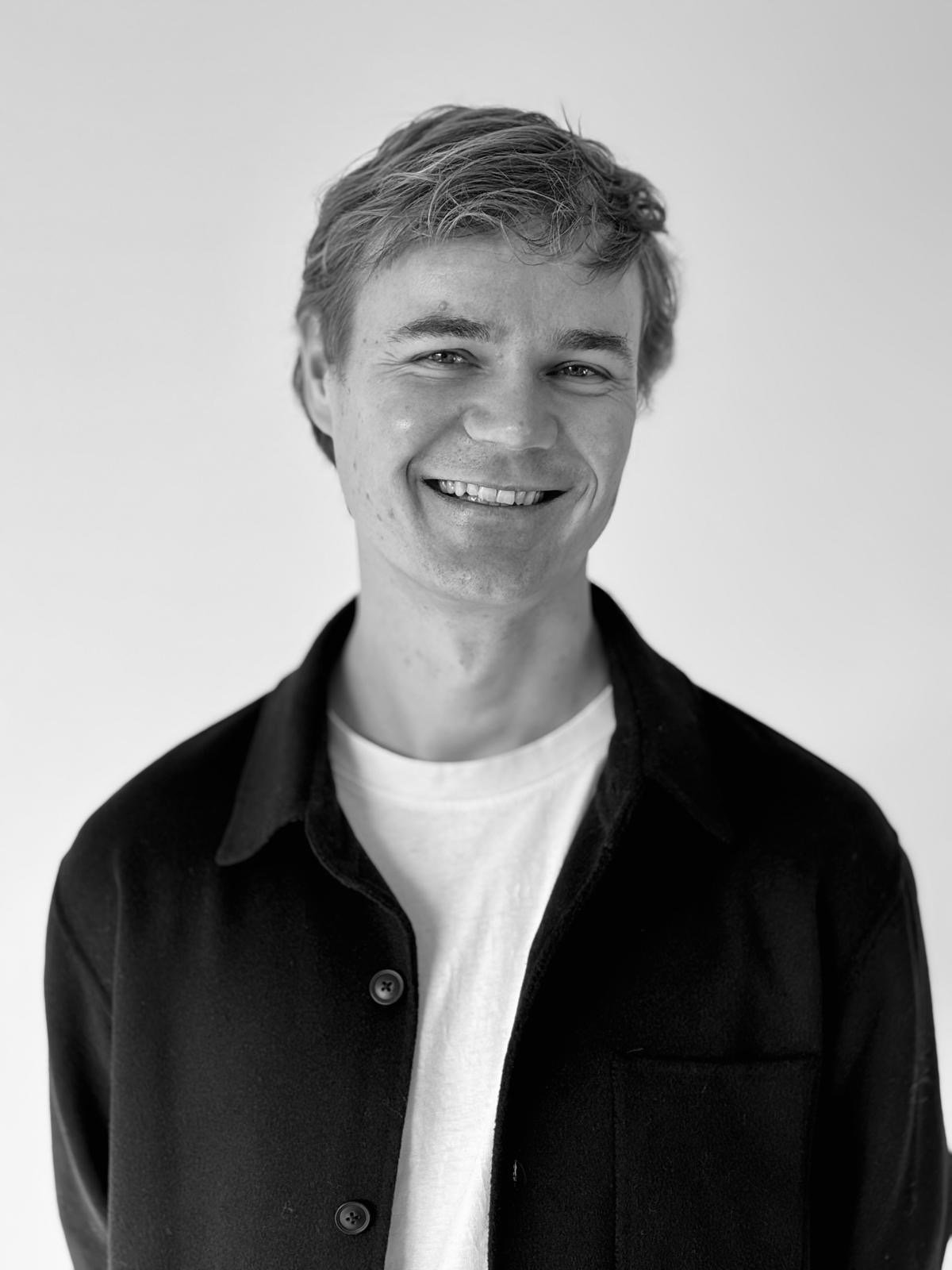
Hi, I'm Lucas!
Physicist, scriptwriter with kurzgesagt - in a nutshell, and science communicator. And someone who spent years being terrible at explaining his own work.
I became a scientist because I am always curious about new things.
What happens when you shoot neutrons at a polymer? Why do some materials behave completely differently at the nanoscale? How do you replace petrol-based polymers with sustainable/renewable materials? I did my PhD in functional polymer research at Technical University of Munich (TUM) and a postdoc at the German Aerospace Center in Cologne and Institute Laue Langevin in Grenoble, before eventually I found my scientific home as an instrument scientist at FRM II — the neutron research reactor at TUM, one of the most powerful research neutron sources in the world.
Along the way, I learned something that bothers me still today: being a brilliant scientist and being able to communicate your science are two completely different skills. And our academic system does not necessarily teach you both.
For years, I was terrible at explaining what I was working on to people outside my scientific niche: to my family during christmas dinners, to my friends at birthday parties, or during small talk in a lift or a pub. My research was important — I genuinely believed that — but I had little idea how to make anyone else see it.
So I started figuring it out. I started writing. I experimented with formats, platforms, and stories. I launched a science podcast.
The podcast “Your Friendly Physicist and other Nerds” started as an experiment.
I wanted to have genuine, unscripted conversations about science with researchers, communicators, and thinkers — and make it interesting to who aren’t necessarily phyiscists or scientists. Each episode, I envisioned as a chat with scientists who are doing fascinating things: creating little bigbangs in the lab, shooting solar cells into space, restoring coral reefs, or sending art to the Moon.
If I managed to do it, is up to you. Feel free to listen on Spotify (or any other podcast platform).
And I started working with kurzgesagt - in a nutshell
A few years and 50+ scripts later, I've learned what it actually takes to turn complex science into something the world wants to hear. Not dumbing it down. Not hiding the nuance. Just telling the story in a way that makes people lean in rather than tune out.
That's what I want to help you do.
Science doesn't speak for itself
You have to speak for it. The best research in the world has zero impact if no one understands it. Communicating your work is an essential part of doing science. And clarity is not the same as simplicity. You don't have to remove the complexity. You have to give people the context to appreciate it.
Your personal story is your biggest scientific asset. People don't connect with papers. They connect with people. The reason you chose your field, the moment something surprised you, the question that keeps you up at night. The tiny little things that make science human.
Science communication is a skill. Nobody is born knowing how to explain neutron scattering at a dinner table. It's something you practise, refine, and get better at. Which means anyone can do it — including you.
The world needs scientists who are heard. Not just scientists who publish. Scientists who show up, speak clearly, and make the case for why what they're doing matters. In times of fake news and AI slop, we need that more than ever.
If that resonates — let's talk.
Want to work together?
Whether you're a research institution looking to train your scientists, a PhD trying to find your voice, or a science media team that needs a writer who actually knows the subject: I'd love to hear from you.
SciComm workshop for institutions
For: graduate schools, research institutes, university departments
A half-day or full-day live workshop that equips your scientists with the tools and confidence to communicate their research to any audience — funders, press, policy makers, or the public.
- How to explain complex research in plain language
- Building a personal brand as a scientist
- Writing for social media, press, and podcasts
- Real exercises with immediate feedback
1:1 coaching for scientists
For: PhDs, postdocs, early-career researchers
Personal coaching to help you find your scientific voice, build your online presence, and navigate the often confusing path between academia and the world outside the lab.
- Define your niche and personal brand
- Build a simple content strategy
- LinkedIn, podcast, or social media setup
- Career clarity: academia vs. industry
Freelance SciComm writing
For: science media, agencies, companies
Script writing, science consulting, fact-checking, and content strategy for teams who want the real thing — not a science writer who googled it last week.
- Video scripts (YouTube, TikTok, podcast)
- Science fact-checking and consulting
- Newsletter and article writing
- Workshop script development